

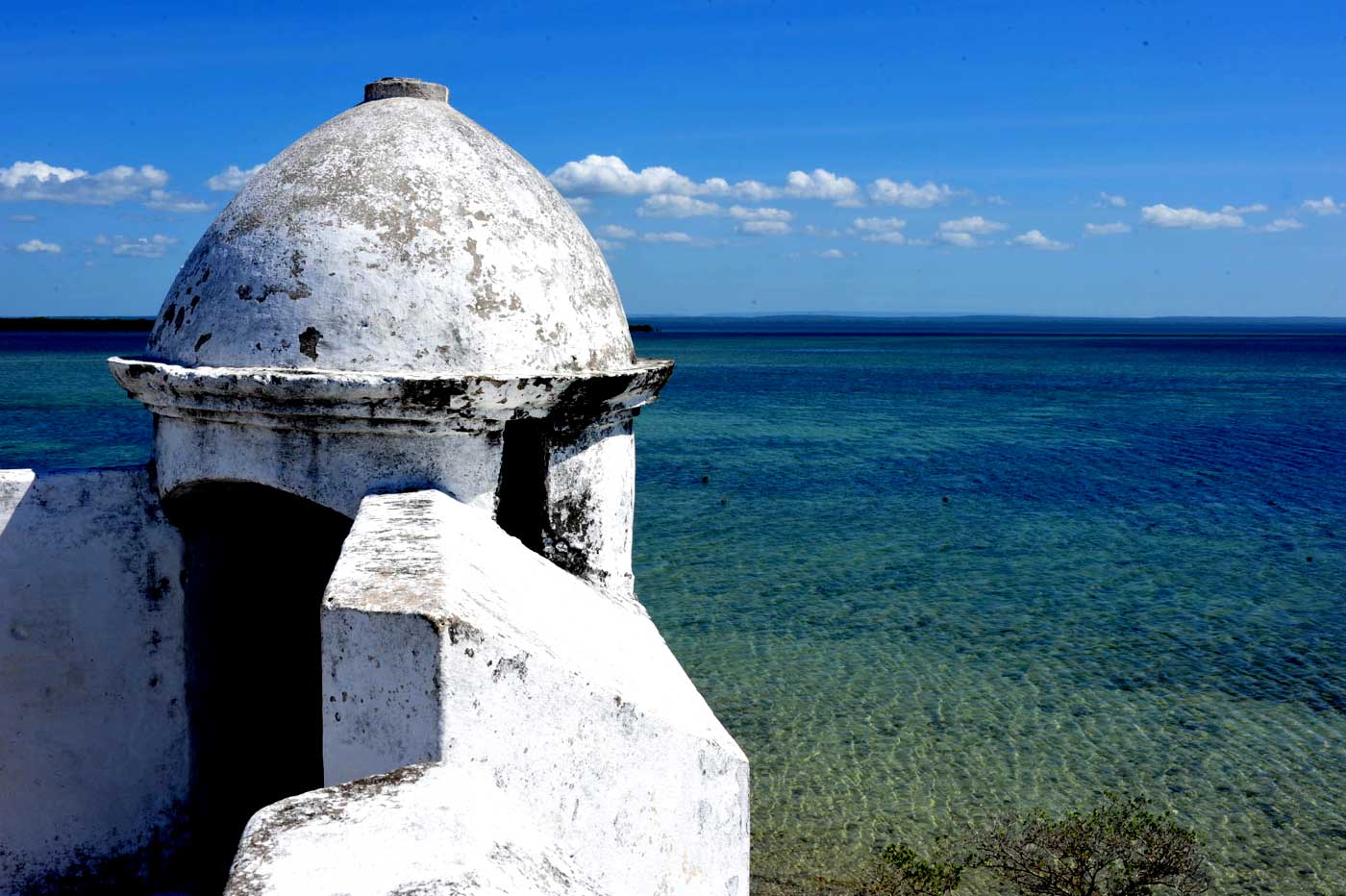
Ibo is one of the oldest settlements in Mozambique and a window onto five centuries of history, between Africa, Arabia, India and Portugal.
The Quirimbas Archipelago
The archipelago is made of about thirty small islands off the coast of northern Mozambique, in Cabo Delgado province, between the city of Pemba and the Rovuma river, which marks the border with Tanzania. Bathed by the Indian Ocean, it is an almost untouched natural sanctuary of forests, rich coral reefs and waters where dugongs, dolphins, sea turtles, whales, sharks and more than 375 species of fish live.
Eleven southern islands belong to the Quirimbas National Park, a marine reserve of more than 1,500 km². The decision to create it was taken in June 2002 by the local population, who signed the proposal made by WWF and a local institution. About 50,000 people live on the islands, most of them from traditional dhow fishing.
A short history of Ibo
Arab merchants traded gold, ivory and slaves with the people of the region long before the Portuguese arrived. Vasco da Gama reached the Quirimbas in 1498, and in 1522 the Portuguese attacked the islands and destroyed their fortifications. By 1590 they controlled seven of the nine large islands. Thanks to the fresh water collected each rainy season, Ibo could raise cattle and grow crops that supplied Mozambique Island.
In the 17th century the archipelago was ruled by a few Portuguese families and Ibo became the commercial centre of the islands. At the end of the 18th century the Portuguese built the fortress of São João Baptista, completed in 1791, with its small chapel added in 1795. The fort of Santo António and the fort of São José, in the Rituto neighbourhood, followed; together these three monuments draw the triangle of the old town. Ibo became the second most important post in the region after Mozambique Island, and also a port of the slave trade.
During the 18th and 19th centuries the islanders suffered repeated attacks by Dutch and Malagasy forces. From 1897 Ibo was administered by the Niassa Company, and a period of relative peace began.

The Mwani people
Ibo has about 5,000 inhabitants, mostly Mwani. In Swahili the word means "those who live along the coast, in contact with the sea", as opposed to the Makonde of the interior, "in contact with the bush". Mostly Muslim, the Mwani see themselves as heirs of the Swahili culture, the "Swahili of Mozambique", and preserve their culture with great pride. Most are fishermen who still fish with traditional methods aboard small local canoes, following the rhythm of the tides.
You may notice women with their faces covered in a white paste: this is mussiro, made from the bark of a local plant and used to protect and beautify the skin.